
Field notes
- Deep Ellum began as a freedmen’s town east of downtown after the Civil War.
- Blind Lemon Jefferson was among the blues musicians who played there.
- The 1983 Deep Ellum Plan kept buildings low and streets narrow.
Deep Ellum is the Dallas neighborhood people mention first when they talk about music. It sits on Elm Street just east of downtown, and its story runs from a freedmen’s town to a blues district to a punk scene to the mural-covered entertainment area it is today. Knowing that history makes a walk through it far more interesting.
From Deep Elm to Deep Ellum
The Handbook of Texas explains that the area was settled as a freedmen’s town by former slaves after the Civil War. Its location on Elm Street, east of the Houston and Texas Central tracks, was then too far from downtown to be desirable. The area was called Deep Elm, or, as early residents pronounced it, Deep Ellum. Because of the railroad it was also known as Central Track. The neighborhood’s own association dates Deep Ellum to 1873.
Factories, the Knights of Pythias and Pawnshop Row
Industry came early. Robert S. Munger built his first cotton gin factory in Deep Ellum in 1884, and in 1913 Henry Ford opened a regional assembly plant there. In 1916 the Grand Temple of the Black Knights of Pythias, designed by William Sidney Pittman, was built in the neighborhood; the Handbook calls it the first commercial building built for and by Black residents in Dallas. By the 1920s Deep Ellum was a retail and entertainment center, famous for a Pawnshop Row of more than ten pawnshops.
Jazz and blues
Entertainment was central to Deep Ellum’s business. The Handbook records 12 nightclubs, cafes and domino parlors in 1920 and 20 by 1950, and it names Blind Lemon Jefferson among the many jazz and blues musicians who played in the neighborhood. That era is why Deep Ellum is still tied to the blues in Texas music history.
Tip: Walk Elm, Main and Commerce streets rather than staying on one block. Murals and music venues are spread across the grid.
Decline and the 1983 plan
The neighborhood declined through the 1940s and 1950s. The railroad tracks and depot were removed, businesses followed shoppers to suburban malls, and the streetcar line closed in 1956. In 1969 the elevated Central Expressway cut through Deep Ellum and eliminated the 2400 block of Elm, the center of the community. In January 1983 the city unveiled the Deep Ellum Plan, which kept building heights low and streets narrow to protect the small, artsy character. Artists and galleries moved into vacant buildings, and in the 1980s the area became home to the Dallas punk scene. By 1991 it had more than 50 bars and nightclubs.
Deep Ellum today
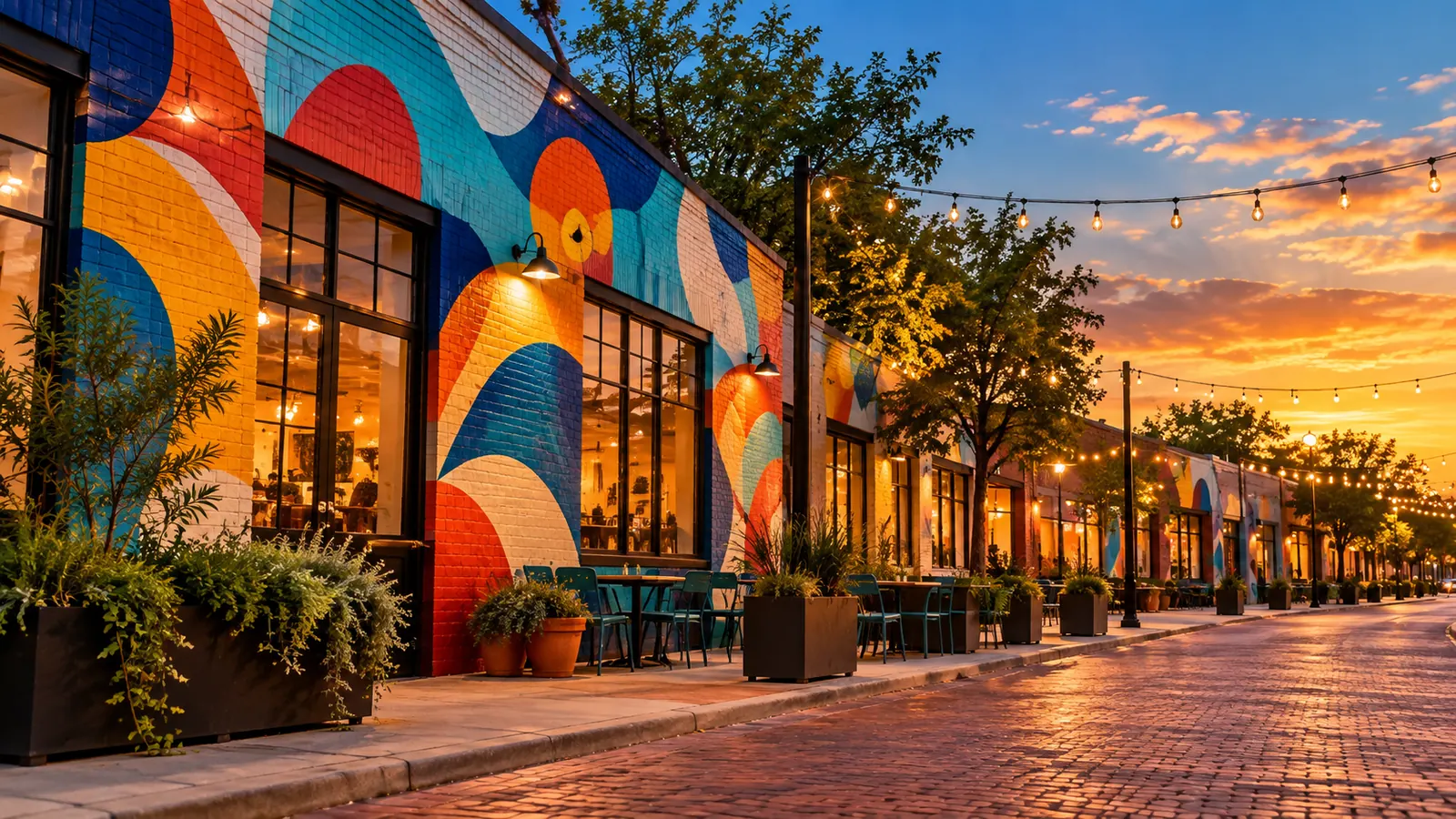
Today the neighborhood describes itself as a creative district where live music fills the streets, with eclectic restaurants and bars, independent shops, contemporary galleries and colorful murals. Its association calls it one of Dallas’s first commercial districts for African Americans and European immigrants. The Handbook notes that by the 2010s a number of music venues had opened or reopened, and that local groups worked on marketing, urban gardening and historic preservation.
| Year | What happened |
|---|---|
| After 1865 | Freedmen’s town settled east of downtown |
| 1884 | Munger’s first cotton gin factory |
| 1913 | Ford regional assembly plant opens |
| 1916 | Grand Temple of the Black Knights of Pythias built |
| 1956 | Streetcar line abandoned |
| 1969 | Elevated Central Expressway cuts through the neighborhood |
| 1983 | Deep Ellum Plan unveiled |
| 1991 | More than 50 bars and nightclubs |
Visiting tips
- Come in the early evening to see the murals in daylight and stay for music.
- Deep Ellum lists street parking, public and private lots and garages near its venues; DART also serves the area.
- Many venues set age limits for evening shows; check before you go.
- Pair the visit with downtown or the Farmers Market, both close by.
Seeing the murals respectfully
Much of the street art is on private buildings. Stay on sidewalks, do not block doorways for photos and keep clear of loading areas. If you want to know more about an individual work, local galleries and the neighborhood association are the best sources.
A neighborhood of firsts
Beyond music, the Grand Temple of the Black Knights of Pythias housed the offices of Black doctors, dentists and lawyers, a ballroom for dances and assemblies, the weekly Dallas Express newspaper and the state and local headquarters of the YMCA at one time, the Handbook of Texas notes. In 1954 business owners formed the Uptown Improvement League to bring shoppers back, an early sign of the revival efforts that continue today.
For more places that tell the city’s story, see Best Dallas Neighborhoods to Explore: Where to Start and What You Will Find. For a quieter cultural afternoon, the museums in the Dallas Arts District Guide: Museums, Concert Halls and How to Plan a Day are a short drive or train ride away.